|
|
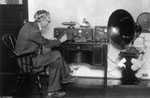
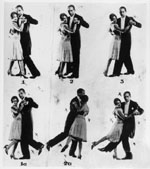
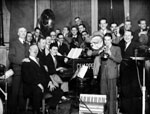
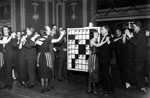
Although the printed word still largely dominated the mass media in those days, a new communications tool began pushing its way onto the market, namely the radio. In 1919 Marconi, the leading broadcaster of the day, transmitted the first talk programmes, although, the number of radio owners was less than modest. At first the broader masses contented themselves with simple crystal sets and cheap headphones. However, increasingly affordable technology and better earnings saw an ever growing number of radio acquisitions. The BBC was founded in 1922, whose programmes were educational rather than entertaining, up until the late twenties. However, due to the listeners’ changing interests, programmes became more geared towards entertainment during the mid thirties, which resulted in the transmission of dance music across the entire county, including Jack Payne, Henry Hall and Jack Hylton (Tip Toe to the Tulip) who along with their bands kicked off the Saturday night broadcast “Music Hall” and the absolute frontrunner on a Wednesday evening, the “Band Wagon”. By 1939 ninety percent of households owned a radio and the gramophone was part and parcel of a father’s most guarded treasures. Radio play, factual news reports and sports broadcasts often rendered the streets of England idle. A good impression of the music in those days can be drawn from two songs dedicated to the Seven or rather to the Austin works: 1. ‘My little Baby Austin’ (1929, Clarkson Rose and Norman Long) and 2. the ‘Austin Unity Song’ (Collie Knox und Vivian Ellis, 20. October 1930). Click on the links to listen! Besides music and the Flappers optically coming off the rails, another form of entertainment materialized. Dances became real physical challenges and the bioscope world created new dreams. The Charleston and Black Bottom attracted criticism. One priest disapprovingly uttered: "If these up-to-date dances, described as the latest craze, are within a hundred miles of all I hear about them, I should say that the morals of a pig-sty would be respectable in comparison." With the thirties came the Swing and every big band had its own permanent singer aka crooner. Dance halls were opened to the broader masses and became part of every weekend activity. |